By: Denko Rafajlovski, Renewable Energy ManagerNational Electricity Market Operator – MEMO The energy transition is...

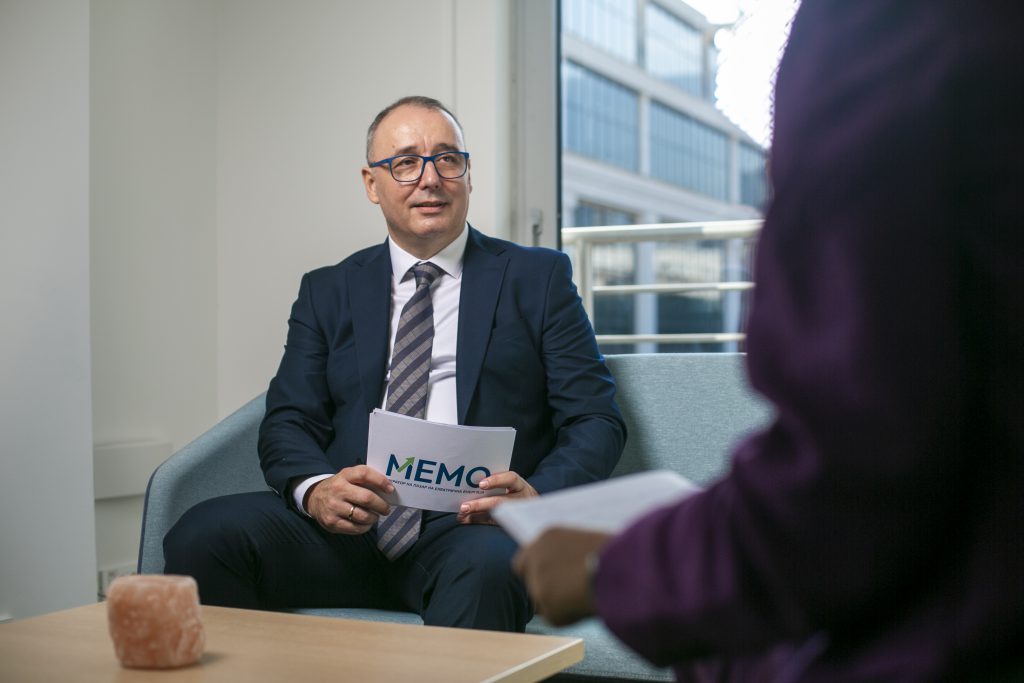
The CEO of the National Electricity Market Operator – MEMO Ltd, Skopje, Zoran Gjorgjievski, in an interview for EVN Supply’s “Journal,” talks about the Macedonian Power Exchange, upcoming projects, and the importance of MEMO in the modernization of the country’s energy sector.
EVN Supply: How has the electricity market changed since the launch of the Macedonian power exchange?
Gjorgjievski: The Macedonian Power Exchange, operated by the National Electricity Market Operator – MEMO, has been functioning successfully for almost two years and has significantly contributed to the modernization and development of the electricity market in our country.
Official trading on the domestic exchange began on May 10, 2023, with 22 companies, and today there are already 37 reputable registered participants actively trading. The establishment of the Macedonian power exchange has led to greater transparency and improved price formation based on supply and demand. This has enabled market participants to better plan their procurement and sales, as well as manage their costs more efficiently.
Through regular day-ahead market trading, Macedonia has established a reference electricity price, providing the economy with a relevant price signal essential for all types of analysis and planning. At the same time, it has strengthened the stability and predictability of the wholesale market. Additionally, the power exchange has stimulated increased competition, resulting in better supply conditions, greater liquidity, and more secure access to electricity for all participants.
EVN Supply: How important is MEMO’s role in the modernization of the energy sector in Macedonia?
Gjorgjievski: The National Electricity Market Operator – MEMO plays a key role in the modernization of our country’s energy sector, particularly through the development of market mechanisms, increased transparency, and integration with regional and European markets.
This role was also recognized in the Energy Community’s Annual Implementation Report, which highlighted the importance of launching the day-ahead market and the progress made toward integration with the single European electricity market.”
MEMO is actively working toward the goal set by the Government and the Ministry of Energy, Mining and Mineral Resources – the creation of a competitive and integrated electricity market that is part of the broader European system. This involves full integration with electricity markets in the region and the EU, enabling greater stability, lower costs, and improved supply efficiency.
Through continuous improvements in trading infrastructure, digitalization, and market segment expansion, MEMO remains a key driver of the energy transition and economic development in our society.
EVN Supply: What were the main challenges you faced over the past year, and how did you overcome them? What are your biggest achievements?
Gjorgjievski: In October last year, we marked 18 years since the establishment of the Electricity Market Operator (EMO) and 5 years since its transformation into the National Electricity Market Operator (MEMO). In addition to the power exchange, MEMO also integrates several market-related functions, including bilateral contract management and the integration of renewable energy sources into the electricity market.
These two anniversaries reflect our long-standing commitment. Thanks to our expert team at MEMO and the support of our partners—EPEX, the largest exchange in the EU, BSP, the Slovenian power exchange, the Energy Community Secretariat, the Ministry of Energy, and all energy sector stakeholders—we are implementing important processes and turning challenges into opportunities.
One of our key achievements in the past period is that MEMO has initiated the process of establishing and introducing a registry for Guarantees of Origin (GOs) for electricity from renewable sources.
We became an observer member of the Association of Issuing Bodies (AIB), reinforcing our commitment to the traceability and transparency of renewable energy. We believe interest will be strong, as Guarantees of Origin prove that electricity comes from renewable sources—something especially important for domestic companies exporting to the European market.
EVN Supply: What are the benefits for companies trading on the day-ahead market?
Gjorgjievski: The growing number of companies trading on the Macedonian power exchange is a clear indicator of increased trust in the day-ahead market. It confirms the market’s reliability and the availability of relevant hourly prices, as well as its competitiveness with regional power exchanges.
For companies, participating in the day-ahead market is a strategic opportunity to better manage energy costs, increase competitiveness, and reduce risks related to electricity price volatility.
EVN Supply: How are electricity prices determined on the Macedonian exchange, and what are the main factors that influence them?
Gjorgjievski: Electricity prices on the Macedonian power exchange are determined based on supply and demand through an auction mechanism, where producers and suppliers submit offers to sell or purchase electricity. This market model ensures transparent and competitive real-time price formation and is identical to the model used in the European Union.
Additionally, the platform used by MEMO is the same one employed by the largest power exchanges in Europe. On the very first day of trading, we had transactions in every hour of the day, achieving satisfactory traded volumes at real market prices.
Since then, electricity has been traded every hour, seven days a week, with a constant increase in supply and demand. This is a positive sign of growth for a young power exchange such as the Macedonian one.
EVN Supply: What are the next steps for developing the power exchange in Macedonia? Are you planning to introduce new trading products?
Gjorgjievski: The development of the power exchange is a continuous process focused on increasing liquidity, regional integration, and introducing new trading mechanisms.
One of our main goals, as previously mentioned, is to connect the Macedonian electricity market with the single European market. In December last year, we signed an agreement with the BSP Energy Exchange Slovenia for technical support that will accelerate the implementation of market coupling.
In this way, we are strengthening cooperation in current and future projects with a focus on coupling the Southeast European electricity markets as part of the Southeast Europe Market Coupling (SEE-MC) Initiative.
Market coupling brings benefits to participants in the organized electricity market, end users, and the national economy by enabling greater competitiveness, more efficient price formation, and access to a larger electricity market.
We are also working on developing an intraday market and, as mentioned earlier, on Guarantees of Origin for renewable electricity.
EVN Supply: How do you see the future of the Macedonian electricity market in the next 5–10 years?
Gjorgjievski: In the next decade, I believe we will successfully implement our planned projects to make the Macedonian electricity market more dynamic, fully integrated with the region and the EU, and more sophisticated in terms of trading and risk management.
The main challenges will also be shaped by global trends and energy disruptions, which could significantly impact our market.
One of the key priorities will be balancing the liberalization of the market with the protection of end consumers from price fluctuations.
With the development of demand-side management, the balancing market, full integration with regional and European markets, and improvements in regulation, we expect a stable, transparent, and competitive electricity market that will contribute to sustainable economic growth and reliable electricity supply.