
19 November 2026, Skopje – The National Electricity Market Operator – MEMO LLC, in cooperation with the Ministry of...
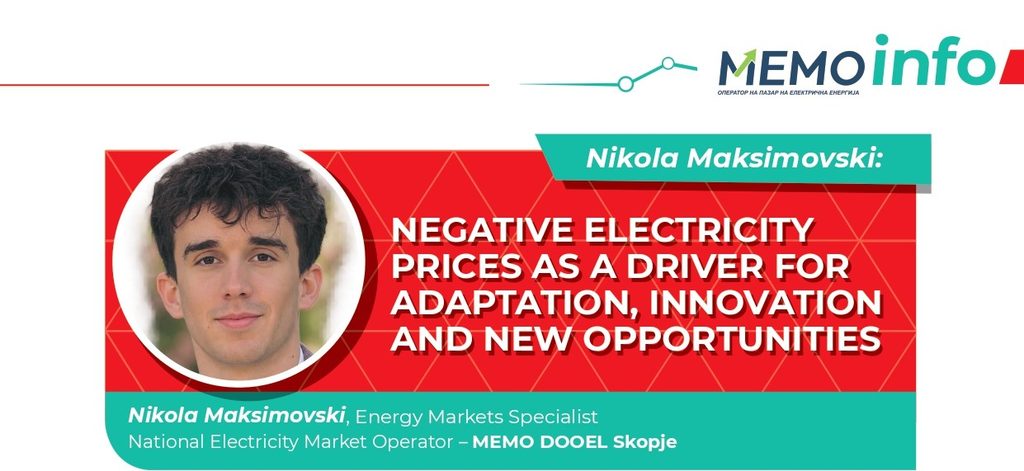
By: Nikola Maksimovski, Energy Markets Specialist
National Electricity Market Operator – MEMO DOOEL Skopje
Introduction
Can electricity have a negative price? Although this may sound unusual at first, it is becoming an increasingly common reality in European electricity markets. During certain hours, when electricity supply is high relative to demand, some producers are willing to sell their electricity at a price below zero.
The growing generation of electricity from renewable energy sources, particularly photovoltaic and wind power plants, is creating new conditions for the formation of market prices. Negative prices represent a new market reality that creates opportunities for more efficient use of generated electricity, the development of flexibility, and further integration with European markets.
Reasons for the Occurrence of Negative Prices
Negative prices occur when electricity supply in the market is higher than demand, while the possibilities for reducing generation, increasing consumption, storing or exporting electricity are limited. This happens most often:
- during sunny days in spring and summer, when increased generation from renewable energy sources is recorded;
- during weekends and public holidays, when industrial consumption is lower;
- during periods of strong generation from wind power plants;
- when transmission capacities are limited;
- when generation capacities do not have sufficient flexibility to rapidly reduce their output.
During certain hours, when electricity supply is high relative to demand, some producers are willing to sell their electricity at a price below zero.
For the Macedonian market, the continuous growth in the number of photovoltaic power plants represents an additional factor affecting electricity price formation. Due to their low operating costs, these generation facilities offer electricity at competitive prices, particularly during hours of high solar generation. As a result, pressure on market prices is increasing, while changes in the dynamics of supply and demand on the Macedonian electricity exchange are becoming more pronounced.
Increased Market Opportunities
The ability to submit orders at negative prices allows participants to trade in a wider price range and more efficiently adapt their activities to current market conditions.
For renewable energy producers, the wider price range creates additional opportunities to sell the electricity they generate, even during periods of high generation and low demand, when market prices may reach negative values. At the same time, low and negative prices create new opportunities for consumers, particularly industrial companies that can adjust their operations and increase consumption during hours when electricity is cheapest.
At the same time, this creates scope for the development of electricity storage systems, which can absorb electricity during periods of low prices and deliver it to the market when demand and prices are higher. In this way, negative prices create an economic incentive for the development of flexibility and more efficient use of generated electricity.
Impact on Market Participants
Negative prices have different impacts on market participants. For producers, they represent a challenge in managing revenues and planning future investments, particularly for power plants whose generation depends on weather conditions. At the same time, such price movements create incentives to invest in storage systems, improve generation forecasting, and develop hybrid power plants.
For suppliers and traders, low and negative prices create opportunities for cheaper electricity procurement and the development of new products for their customers, while at the same time requiring more appropriate strategies for managing price risks.
Consumers, particularly industrial companies with flexible production processes, have an opportunity to adjust their consumption to market conditions and reduce their electricity costs. In this way, active consumer participation becomes an important factor in the more efficient functioning of the market.
The Role of MEMO in Conditions of Negative Prices
The primary role of an organised electricity market is to ensure transparent price formation based on supply and demand. In this context, negative prices represent a market signal reflecting conditions during periods of high generation and reduced demand.
For MEMO, as the operator of the organised electricity market, such market conditions create opportunities for greater market participant activity and the development of new trading models, particularly in the intraday market. At the same time, negative prices create an economic incentive for the development of energy storage systems, aggregators and active demand-side management.
By providing transparent and efficient market mechanisms, MEMO plays an important role in creating conditions for the more efficient use of renewable energy sources and the development of a more flexible electricity system.
Challenges and Opportunities
As the share of renewable energy sources increases, the Macedonian electricity sector faces the need for further development of market mechanisms and greater flexibility on both the generation and consumption sides. In such conditions, particular importance is attached to investments in electricity storage systems, improvements in generation and consumption forecasts, and greater participation in the intraday market, which enables market participants to adjust their trading positions closer to the time of physical delivery.
Conclusion
Negative electricity prices represent a new reality in modern markets, arising from changes in the way electricity is generated and consumed. Although they create certain financial challenges for producers, they also open up new opportunities for consumers, the development of storage systems, and more efficient use of renewable energy sources.
For MEMO, negative prices represent a new phase in the development of the organised market, greater market participant activity, and more efficient balancing of supply and demand.
The future of the electricity sector lies not only in generating more green energy, but also in creating a flexible system that will enable this energy to be efficiently absorbed, stored and used at the times when it is most needed.
MEMO INFO